Understanding Parkinson’s disease through interdisciplinary expertise and perspectives
Posted: 28 July, 2026
In this blog, Dr. Jude Bek tells us about presenting her DOROTHY fellowship research on therapeutic dance, interoception, and patient engagement at the International Parkinson’s Disease and Movement Disorders Society Congress in Hawaii, highlighting emerging technologies, interdisciplinary insights, and the importance of human perspectives in advancing care and quality of life for people with Parkinson’s.
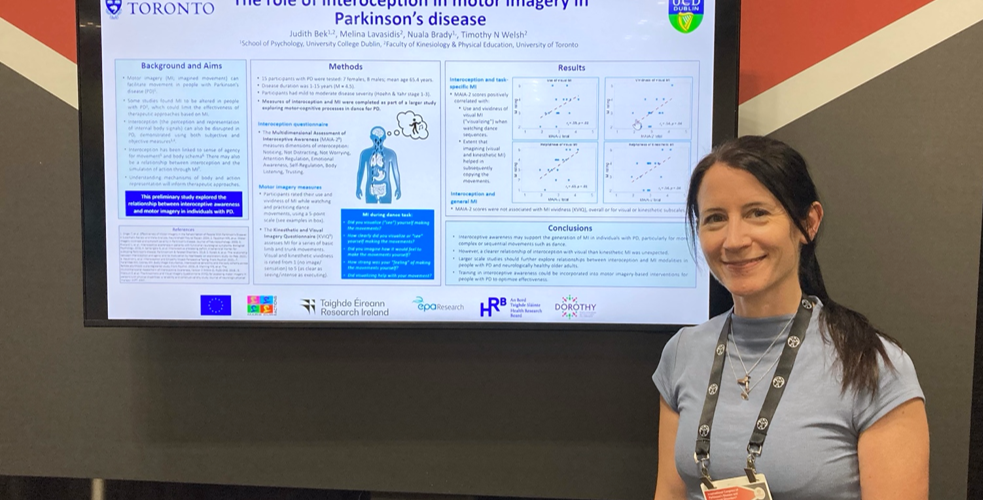
In October 2025 I attended the International Parkinson’s Disease and Movement Disorders Society (MDS) Congress in Honolulu, Hawaii. The conference was attended by over 3750 participants from 100 different countries, making it an ideal opportunity to share my work with an international audience of researchers and health professionals.
During the outgoing phase of my DOROTHY fellowship at the University of Toronto, I studied quantitative measures of movement during therapeutic dance-based exercises in people with Parkinson’s and healthy older adults. The main analysis is currently underway, where I am examining aspects of movement such as coordination, speed, and smoothness while participants practice dance-based movements under different conditions. At the MDS Congress, I presented some preliminary findings, which indicated that how people with Parkinson’s engage in dance is related to levels of interoception – the perception and interpretation of internal bodily signals – such that people who are more “in tune” with their body sensations were more able to use imagery to support their movement.
I also presented the findings of a patient engagement project from my secondment with Parkinson Canada. Working with Parkinson Canada during my fellowship provided opportunities not only to gain insights into the workings of non-profit organizations, but also to make valuable connections with other researchers, clinicians and people with lived experience of Parkinson’s disease across Canada. Part of my work with Parkinson Canada involved organizing and chairing a series of “patient engagement in research” workshops to support patient-researcher partnerships, with the aim of enhancing the real-world relevance and impact of research. After presenting the findings at the MDS Congress, we are now planning to publish a journal article about the project that will be widely shared with researchers and stakeholders.
Highlights of the conference program included learning about the latest technologies being used to enhance diagnosis and treatment of Parkinson’s, and how artificial intelligence (AI) might help to “bend the trajectory” of Parkinson’s by supporting detection, prediction, monitoring and therapy. Another important topic was the widespread and complex impact of pesticides on Parkinson’s risk, including how different environmental, lifestyle and genetic risk factors interact to modify an individual’s susceptibility.
While AI and digital technologies certainly offer exciting new possibilities to advance healthcare, it was noted that to most effectively capitalize on these new advances, there is still a critical need for human perspectives to contextualize and interpret the data. This echoes my approach to research, which combines fundamental scientific investigation with qualitative data to understand the real-world relevance and applications of scientific knowledge.
Also linking to my work on dance and exercise for neurorehabilitation, I attended a session on arts-based therapies for Parkinson’s, which discussed the physical and psychological benefits of creative activities including dance.
Throughout the conference, what struck me as a core theme was the importance of interdisciplinary expertise and complementary perspectives. Parkinson’s is a complex and heterogeneous disease, requiring an integrated approach to understand, diagnose, and treat.
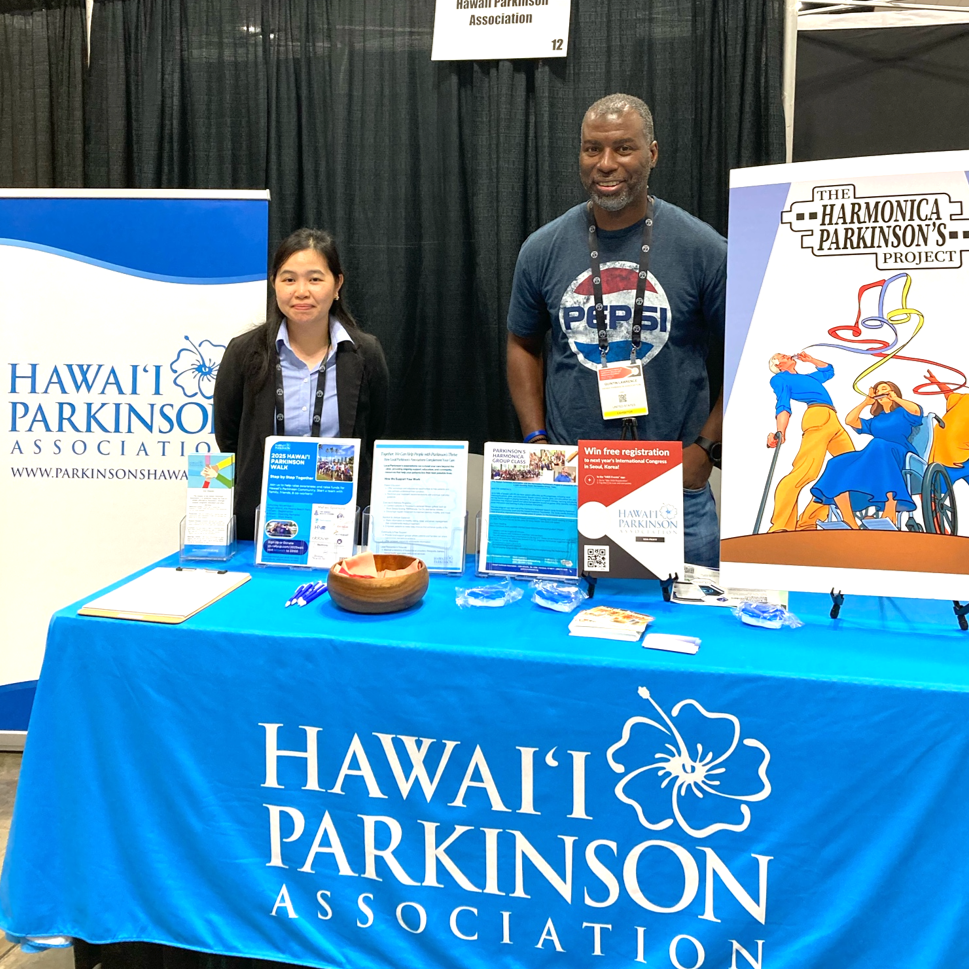
As well as learning about the latest advances in Parkinson’s research and treatment, the conference was a great opportunity for networking. I met potential collaborators from Canada and Australia and even started discussing plans for new projects. I also met patient advocates from the Hawaii Parkinson’s Association and heard about some of their initiatives, including innovative activity programs like a music group specifically designed for people living with Parkinson’s. This was a good reminder that while the ultimate goal is to find a cure or disease-modifying treatment for Parkinson’s, individuals living with the condition also want to find ways to live better day-to-day with Parkinson’s and take back some control over their symptoms.