Dr. Sophie Franklin: Histories of Domestic Violence and Disease
Posted: 25 November, 2025

25th November marks the UN’s International Day for the Elimination of Violence Against Women. Almost one in three girls and women aged 15 or older have experienced intimate partner violence and/or sexual violence. In this blogpost, Dr Sophie Franklin reflects on the prevalence of violence against women and the history of viewing domestic violence in relation to health and disease.
During the early stages of the COVID-19 pandemic in 2020, millions of people had to stay indoors. Although governments implemented these restrictions to protect the public, particularly its more vulnerable members, lockdowns also meant domestic violence victim-survivors were forced into near-constant confinement with their abusers. In April 2020, the American journalist, Amanda Taub, wrote in The New York Times that the world should add “another public health crisis to the toll of the new coronavirus: Mounting data suggests that domestic abuse is acting like an opportunistic infection, flourishing in the conditions created by the pandemic”. COVID brought into sharp relief what many experts have argued for several decades: that domestic violence is a public health crisis, requiring major interventions from the health sector.
In my current DOROTHY project, I am tracing an English-language literary history of, what I call, the “violence as contagious” narrative, which positions violence as a contagious disease metaphorically and, sometimes, literally. Taub’s comments are indicative of a wider trend in which journalists, commentators, politicians, and researchers increasingly liken violence against women to a disease. For instance, in June 2025, the leader of the Labour party in Ireland, Ivana Bacik, remarked that the latest report from Women’s Aid revealed there is still “an epidemic of violence against women” that the country needs to confront.
My project traces the history of the “violence as contagious” narrative to nineteenth-century literature. Throughout my research, I have come across writers who discuss domestic violence against women through the prism of disease. One such source comes from a letter by Charlotte Brontë, the author of Jane Eyre (1847).

In the letter written in 1847, Brontë writes to her best friend, Ellen Nussey, telling her about a recent encounter she had at the Haworth Parsonage, where she and her siblings lived with their father, Reverend Patrick Brontë. She asks Ellen:
Do you remember my telling you or did I ever tell you about that wretched and most criminal Mr Collins—after running an infamous career of vice both in England and France—abandoning his wife to disease and total destitution in Manchester—with two children and without a farthing in a strange lodging house—?
The “wretched and most criminal” man in question was Reverend John Collins, curate at Keighley (near Haworth in Yorkshire) from 1840 to 1845/46. Brontë then goes on to recount her meeting with Mrs Collins:
Yesterday evening Martha came up stairs to say—that a woman—“rather lady like” as she said wished to speak to me in the kitchen—I went down—there stood Mrs Collins pale and worn but still interesting looking and cleanly and neatly dressed as was her little girl who was with her—I kissed her heartily—I could almost have cryed to see her for I had pitied her with my whole soul—when I heard of her undeserved sufferings, agonies and physical degradation—she took tea with us stayed about two hours and entered frankly into the narrative of her appalling distresses—her constitution has triumphed over the hideous disease—and her excellent sense—her activity and perseverance have enabled her to regain a decent position in society and to procure a respectable maintenance for herself and her children—
Brontë’s letter gives us an insight into nineteenth-century attitudes to domestic violence. She paints a vivid picture without divulging anything too graphic. This delicate balance between silence and disclosure reflects wider Victorian writing practices around intimate violence. Many mid-nineteenth-century writers and legislators were considering the problem with increasing urgency; yet it also remained a taboo topic that brought the private into the public realm.
Brontë’s reference to Mrs Collins triumphing “over the hideous disease” is ambiguous: it might refer to the unnamed “disease” which Mr Collins gave to his wife; but it might also refer to Mr Collins himself and his abuse. Either way, in this letter, Brontë brings domestic violence into dialogue with disease and ill-health. And she was not alone. Thirty years later, in 1878, the Irish philosopher and women’s suffrage campaigner, Frances Power Cobbe, wrote an article titled ‘Wife-Torture in England’. In it, she contended that English society needed to find a “remedy” or “palliative” for the “immediate causes of the offence of brutal violence”.
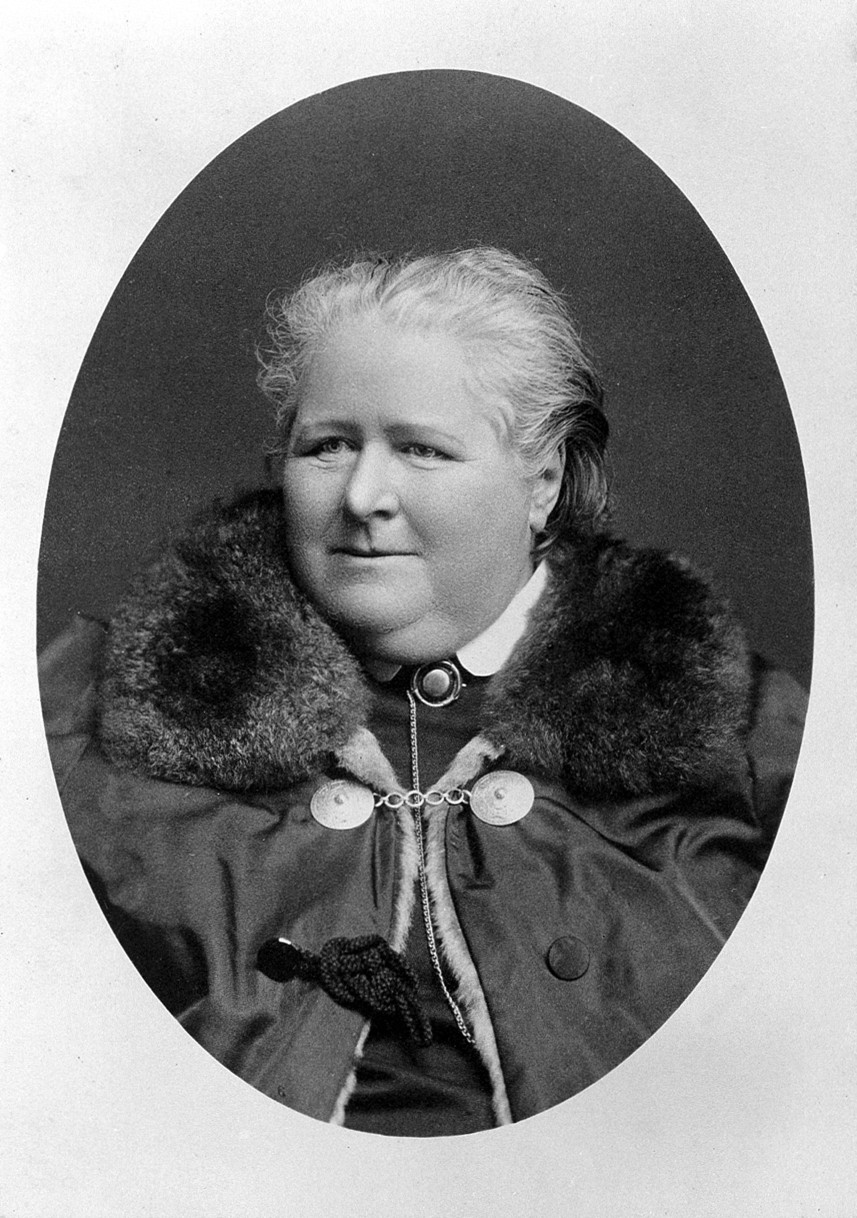
Cobbe’s words, sadly, still resonate today. And Mrs Collins’s experiences, as told by Brontë, also remain all too familiar for many women in the twenty-first century. Viewing domestic violence as a disease has a long history. There are, however, risks to this kind of framing, such as undermining the agency of abusers and overlooking wider cultural gender-based causes. It is no longer enough to simply frame domestic violence as a public health crisis. Nineteenth-century writers were already doing so and the crisis continues. It must now be accompanied by rigorous, wide-reaching overhauls in social and political attitudes and approaches – only then might we bring this “epidemic” to an end.